
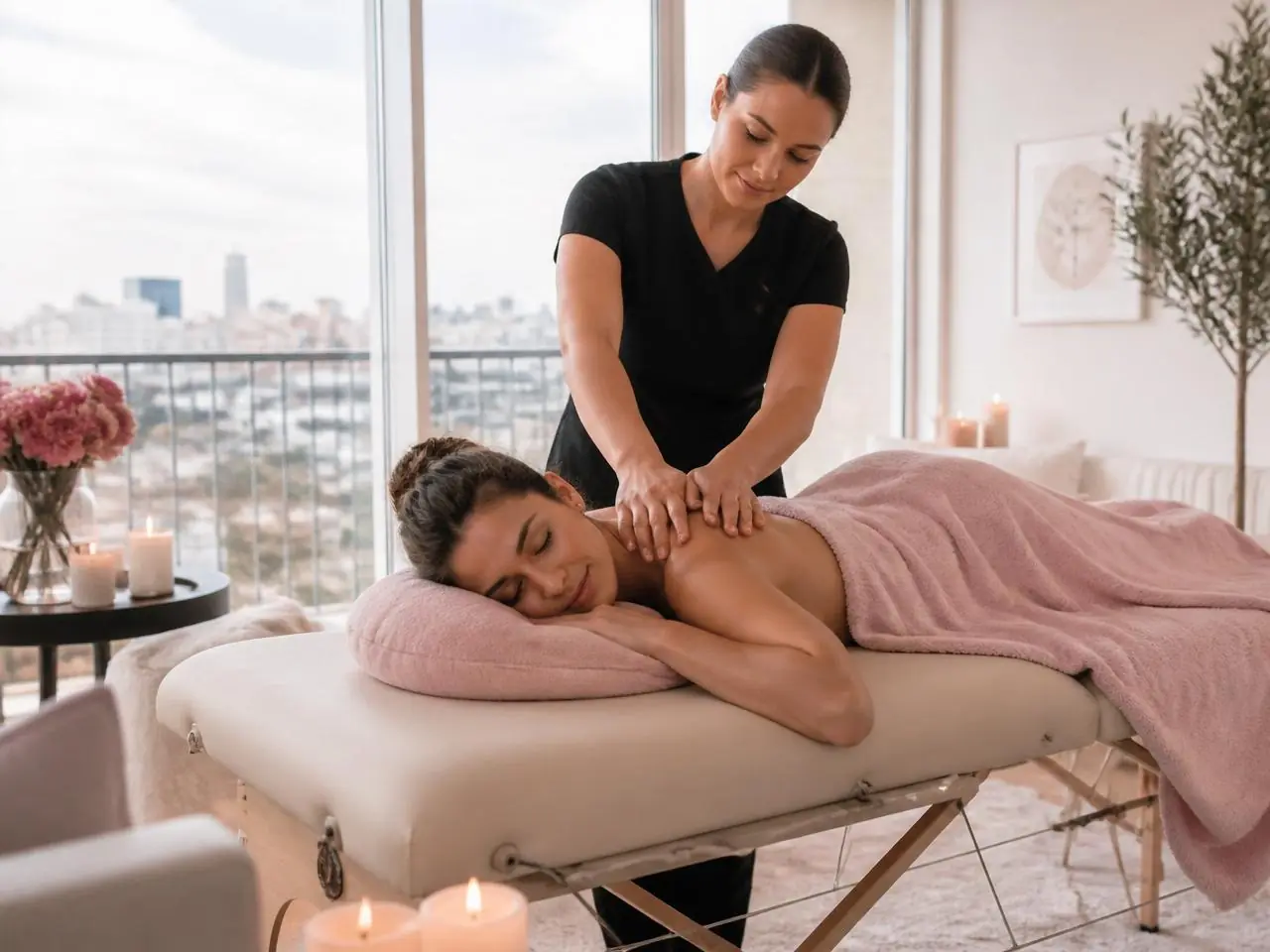
Booking the wrong massage is the usual reason people say massage 'didn't do anything'. The names describe technique and pressure, not quality, and the right one depends on whether you want to switch off, work on a specific tight area, or recover from training. Here is what each actually involves.
Swedish: the default for relaxation
Long, flowing strokes with light to medium pressure over the whole body. It is the best first massage and the right choice if the goal is to sleep better, calm down after a heavy few weeks, or simply enjoy an hour off.
How it should feel: pleasant throughout, never painful. Book 60 minutes for a full body, or 30 for back, neck and shoulders.
Deep tissue: for stubborn tightness
Slower work with firmer, more targeted pressure into deeper muscle layers, usually focused on a few areas rather than everything. It suits desk-related neck and shoulder tension, a tight lower back, or an area that has been nagging for weeks.
How it should feel: intense but tolerable — a sensation you can breathe through, not sharp pain. Speak up about pressure; a good therapist adjusts immediately. Expect to feel a little tender the next day and drink plenty of water.
Sports massage: for training and recovery
Combines deeper work with stretching and movement, aimed at a specific activity or niggle rather than general relaxation. Useful before or after events, during heavy training blocks, or for a recurring problem area in runners and cyclists.
It is not a substitute for physiotherapy. If you have pain that limits movement, numbness or an injury that is not improving, see a physiotherapist or GP first.
Pregnancy massage
Adapted positioning — usually side-lying with cushions — and gentler pressure, focusing on the lower back, hips and legs where pregnancy strain concentrates. Only book with a therapist specifically trained in pregnancy massage, and check with your midwife or doctor first, particularly in the first trimester or if your pregnancy is being monitored.
Reflexology and other options
Reflexology applies pressure to points on the feet and is popular with people who find full-body massage uncomfortable or want something deeply relaxing while staying clothed. Hot stone adds warmth to help muscles release, and aromatherapy adds essential oils to a Swedish-style treatment — mention allergies and pregnancy before oils are chosen.
Practical things worth knowing
For a massage at home, you need a space roughly two metres by two metres, a warm room and somewhere for the therapist to set up a table. Avoid a heavy meal beforehand, and leave 15 minutes afterwards rather than jumping straight into a meeting.
Tell your therapist about injuries, recent surgery, skin conditions, pregnancy, blood-thinning medication or anything you are being treated for. Massage is not appropriate with a fever, an infection, or over an area with new swelling — reschedule instead.
- Want to switch off: Swedish, 60 minutes
- One tight area: deep tissue, 60 minutes
- Training or a niggle: sports, 60 minutes
- Pregnant: pregnancy massage with a trained therapist
- First massage ever: Swedish, and say you are new
Common questions
- Should a deep tissue massage hurt?
- It should feel intense but manageable. Sharp or breath-holding pain means the pressure is too much — say so, and it will be adjusted.
- How long should I book?
- Sixty minutes suits most people. Thirty works for back, neck and shoulders only; ninety is worth it if you want full body plus focused work.
- How often should I have a massage?
- Monthly is common for general wellbeing. During heavy training or a flare-up of tension, fortnightly for a short period is more useful than one long session.
- What do I need for a massage at home?
- A warm room with about two metres of clear space, a plug if heat is used, and clean towels — although most mobile therapists bring their own table and linen.