
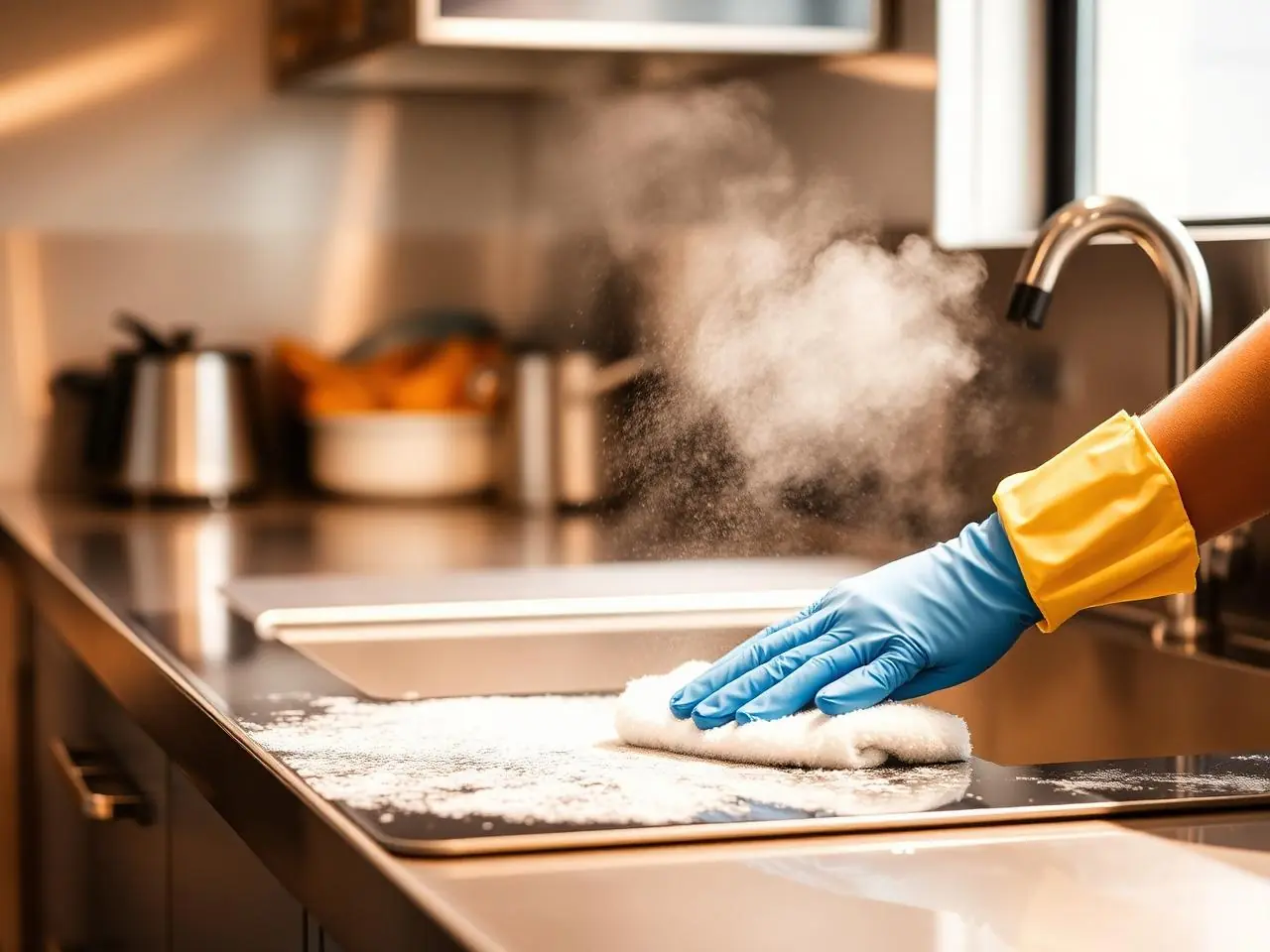
Most of London sits on chalk and limestone, so tap water carries a high level of dissolved calcium and magnesium. That is hard water. It is safe to drink and perfectly normal — it just leaves deposits on everything it touches, and those deposits cost you time and money.
How to tell how hard your water is
Your water supplier publishes hardness by postcode on its website, usually as a number in parts per million or in degrees Clark. If you would rather not look it up, the everyday signs are reliable: a white crust inside the kettle, cloudy patches on the shower screen that come back within days, soap that will not lather, and stiff towels after washing.
What it actually costs you
Scale is an insulator. A furred-up kettle element, immersion heater or boiler heat exchanger has to work harder to heat the same water, so it uses more energy and eventually fails sooner. Washing machines and dishwashers need more detergent to get the same result. Taps, shower heads and screens look dirty even after cleaning.
Cheap fixes that genuinely work
Start here before buying anything expensive. Most limescale problems in a flat are solved by routine rather than equipment.
- Squeegee or wipe the shower screen and tiles after every shower — this alone prevents most build-up
- Descale the kettle monthly with a proper descaler or white vinegar, then boil and discard twice
- Soak the shower head in descaler in a bag tied around it overnight
- Use a dishwasher salt and keep the rinse aid topped up, even with all-in-one tablets
- Run a hot maintenance wash with a machine cleaner every month or two
- Dry taps after use — polished chrome scales far more slowly
When a water softener is worth it
A plumbed-in ion-exchange softener removes the minerals for the whole property. It is a real change: softer laundry, less soap, no scale in the boiler, and bathrooms that stay clean with far less effort. It also costs several hundred pounds installed, needs space under a sink or in a utility area, needs salt topped up, and needs a plumber. Softened water is generally not recommended for drinking, so a separate hard-water tap is usually kept at the kitchen sink.
It tends to make sense if you own your home, plan to stay, and are already spending on scale-related repairs. A cheaper middle ground is a shower-head filter or an inline scale inhibitor fitted before the boiler, which protects the appliance rather than your skin.
Hard water, skin and hair
Minerals in the water bind with soap and shampoo, leaving a film that makes hair feel coated and dull and can make skin feel tight. It is not damage, but it changes how products perform. A weekly clarifying or chelating shampoo, a final rinse with cooler water, and slightly less product usually restores the difference. Colour-treated blonde hair is the most obvious victim, which is why colourists in London often recommend a filtered shower head.
Never scrape scale off
Metal scourers and blades scratch chrome, glass and enamel, and the scratches then hold scale even faster. Dissolve it instead: a mild acid such as citric acid or white vinegar, given time, does the work with no scrubbing. On natural stone worktops or marble tiles, do not use vinegar at all — it etches the surface, so use a product made for stone.
Common questions
- Is hard water bad for you?
- No. It is safe to drink, and the minerals are the same ones found in mineral water. The problems are practical rather than medical.
- How often should I descale in London?
- Monthly for a kettle in daily use, and every one to three months for shower heads and coffee machines. Waiting longer makes each job harder.
- Do magnetic or electronic descalers work?
- Evidence for them is mixed and they do not remove minerals from the water. If you want a guaranteed change, an ion-exchange softener or physical filtration is the route.